







Welcome to Contactlenses.co.uk
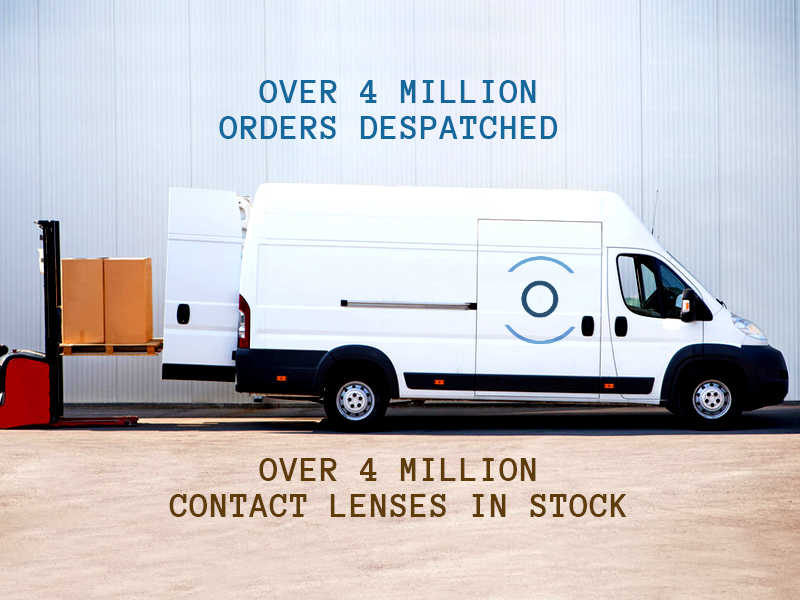
We are an online retailer specialising in contact lenses plus solutions and accessories and have been online since 1996 and selling cheap contact lenses direct to customers since 2002. In that time we have despatched over 4 million orders and we take pride in the fact that over 90% of orders are from existing, satisfied customers. We literally started from our spare room and grew from there and still proudly independent (one of the few).
Being online means that customers can also order what they want, when they want, 24 hours a day. Our huge stock (over four million contact lenses!) results in you getting your contact lenses fast - the order is generally posted within 24 hours, in a letterbox friendly package (where possible) delivered to an address of your choosing - not just home, as is often the case with online ordering.
If you would like further information please contact our customer support team who will be happy to help or you can help yourself by searching our user friendly Help Pages.
 In order to find the best daily contact lens we looked at the technical specifications - the water content, availability of a UV block, oxygen transmission, wetting properties and material. On the prescription side, we looked at the powers that are available and overall size, and fitting characteristics. Not least we looked at the consumer experience - what was the customer feedback on the daily lenses and of course, the price. So here we go with our review and some final recommendations...